Poetry
To say: good, but I object.
Or: I object, but it is good.
Or shorter: but it's, but good.
Or even shorter: but.
At the meeting point of law, narrative, and human relationships.
“People tend to forget, for various reasons, some of them justified, that a law is also a poem”
Laws Like Poems

Yair Eldan is an Israeli writer, poet, and scholar who teaches at the Faculty of Law at Ono Academic College. His work moves among law, literature, Jewish texts, and conflict studies. He completed his undergraduate studies at the Hebrew University of Jerusalem and his doctorate at Bar-Ilan University. His research on excommunication in rabbinic literature led to a sustained interest in how communities define boundaries, exercise authority, and negotiate disagreement.
In Excommunication, Death and Mourning he examines the boundaries of community in rabbinic literature. His novel Law Life explores power, gender, and relationships through the notebooks of a fictional leader. Laws Like Poems collects essays on law, politics, and culture.
Contact: yair.eldan@gmail.com

A study of excommunication and mourning in rabbinic literature.
Book details ↗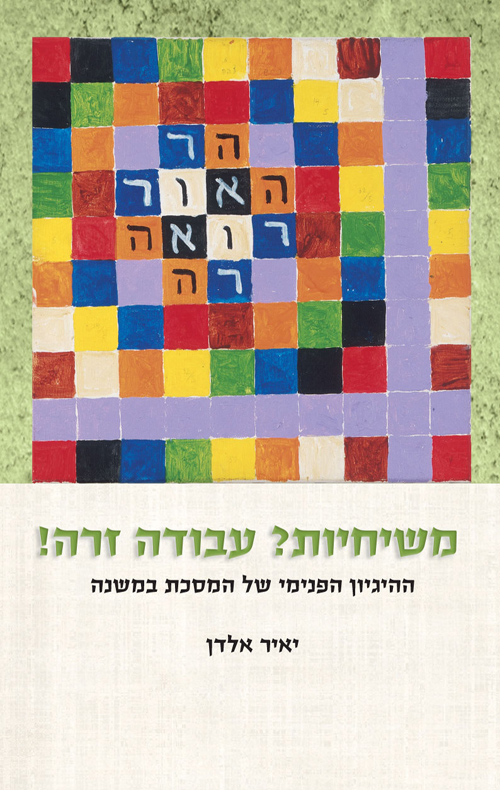
A reading of Mishnah tractates as complete works with an internal logic.
Book details ↗
A work of fiction by Yair Eldan.
Book details ↗
A novel co-written with Orna Reuven.
Originally published in Hebrew as The Letter (Keter, 2016).
Buy on Amazon ↗Hebrew edition ↗
A collaborative work with Shulamit Almog.
Book details ↗
Three notebooks tell of Naomi Yahav’s rise to power and fall in a fictional Israel.
Book details ↗
Poems moving among memory, relationships, war, and daily life.
Book details ↗
Eight short essays weaving together law, politics, and culture.
Book details ↗Further publications and papers are available on Academia.edu.
Five poems in English, including two from Temple Poems.
“And let them make me a sanctuary; that I may dwell among them” (Exodus, 25:8)
Eldan researches and teaches Jewish law, jurisprudence, law and literature, and religion and conflict management. His teaching brings the Bible, Mishnah, Talmud, and literature into conversation with legal theory to examine authority, resistance, reconciliation, and the possibility of living with disagreement.